
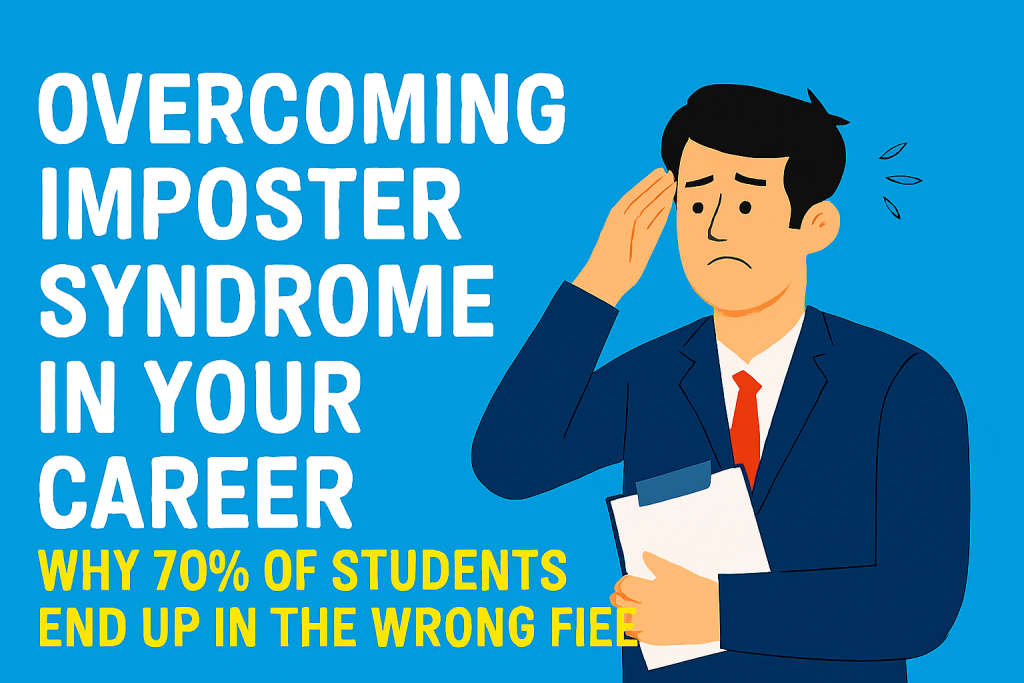
Introduction: Do You Feel Like You Don’t Belong in Your Own Career? Are you struggling with self-doubt despite your achievements? You’re not alone. Many young professionals face the challenge of overcoming imposter syndrome in their career, especially in today’s competitive environment. Whether you’re a student, recent graduate, or switching careers in Pakistan, this silent struggle

Introduction: Do You Feel Like You Don’t Belong in Your Own Career?
Are you struggling with self-doubt despite your achievements? You’re not alone. Many young professionals face the challenge of overcoming imposter syndrome in their career, especially in today’s competitive environment. Whether you’re a student, recent graduate, or switching careers in Pakistan, this silent struggle can affect your confidence and slow your progress.
What is Imposter Syndrome and Why Is It Critical to Overcome in Your Career?
Imposter Syndrome refers to a psychological pattern where individuals doubt their accomplishments and fear being exposed as “frauds,” even when they are clearly qualified. These feelings can be deeply rooted in cultural expectations, academic pressure, and societal comparisons.
In Pakistan, several unique factors intensify this experience:
- Conventional career expectations (e.g., becoming a doctor, engineer, or bureaucrat) leave little room for exploration.
- Lack of career counseling leads to directionless decisions.
- Social media comparisons create unrealistic standards of success.
- Stigma around mental health discourages open discussions about self-doubt and anxiety.
According to a 2023 survey by a Pakistani educational NGO, nearly 7 out of 10 students reported experiencing high levels of self-doubt regarding their future careers. These aren’t just numbers—they reflect a widespread emotional challenge that needs attention.
How Imposter Syndrome Can Hinder Your Career Development
Unchecked, imposter syndrome can severely limit your potential. Its effects reach far beyond just “feeling bad”—it actively interferes with your career progression and personal growth.
Here are several common ways it manifests:
- Missed opportunities: You might hesitate to apply for roles, scholarships, or programs because you think you’re not qualified.
- Burnout from overworking: Constantly trying to “prove yourself” can lead to exhaustion.
- Fear of failure: You may avoid taking on new challenges to escape the risk of being exposed.
- Poor communication: You might downplay your accomplishments in interviews or meetings.
As a result, your confidence erodes, your skills go unnoticed, and you stay stuck in a cycle of self-doubt. To break free, it’s essential to address both the mindset and the environment contributing to these feelings.
Why Do Young Pakistanis Experience Imposter Syndrome More Often?
Understanding the local context is key. Several structural and cultural factors in Pakistan contribute to the rise of imposter syndrome among youth.
1. Rigid Academic Systems Create Narrow Definitions of Success
Focus keyword: Academic pressure in Pakistan
Pakistani schools and universities often prioritize memorization and exam results over critical thinking or creativity. Consequently, many students feel unprepared for real-world problem-solving or career choices. This mismatch between education and employment fuels insecurity.
2. Limited Career Mentorship Leaves Students Directionless
Focus keyword: Career guidance in Pakistan
Without access to structured career guidance, most students rely on family, peers, or social media for advice—sources that may not always offer informed or unbiased support.
3. Cultural Stigma Discourages Conversations About Self-Doubt
Focus keyword: Mental health in professional development
Admitting you feel like a fraud can be seen as weakness in many circles. As a result, students and professionals bottle up their insecurities, allowing imposter syndrome to thrive in silence.
What Are the Warning Signs of Imposter Syndrome?
Recognizing the symptoms is the first step toward overcoming them. Ask yourself:
- Do I feel uncomfortable when someone praises my work?
- Do I believe my success is mostly due to luck or timing?
- Do I fear that I’ll be “exposed” as less competent than others think?
- Do I find it hard to accept compliments or internalize success?
If these resonate with you, it’s highly likely you’re experiencing imposter syndrome. The next step is to adopt strategies that will help you manage and reduce these feelings over time.
How to Overcome Imposter Syndrome and Build Confidence in Your Career
Let’s explore practical, evidence-based strategies you can use to confront imposter syndrome head-on—starting today.
1. Recognize and Name the Problem
Focus keyword: Emotional awareness in professional life
Instead of ignoring your self-doubt, acknowledge it. Give your feelings a name. Research shows that labeling emotions helps reduce their intensity. This shift in awareness is the foundation of emotional intelligence, a critical skill for workplace success.
✍ Action Tip: Keep a journal and note down moments of doubt. Ask: Is this feeling based on fact or fear?
2. Differentiate Between Feelings and Facts
Focus keyword: Self-awareness and personal growth
Just because you feel inadequate doesn’t mean you are inadequate. Reflect on your actual achievements—projects completed, degrees earned, feedback received. These are facts, not opinions.
🧠 Quick Exercise: List five situations where you expected failure but achieved success. Review them weekly as reminders of your capability.
3. Request Feedback, Not Validation
Focus keyword: Constructive feedback in professional development
Instead of seeking praise, actively request constructive feedback. This helps you focus on areas of improvement and separates your emotions from objective performance evaluations.
💬 Real Insight: In Pakistani workplaces, employees who ask for feedback are often viewed as proactive learners—not as insecure individuals.
4. Set Realistic, Measurable Career Goals
Focus keyword: Goal-setting for students and fresh graduates
Avoid vague ambitions like “I want to be successful.” Break your goals into smaller, actionable milestones. This keeps you grounded and gives you a roadmap to measure progress.
🎯 Try This: Create a 3-month development plan focusing on one area—such as communication, public speaking, or technical skills.
5. Stop Comparing Your Path to Others’ Journeys
Focus keyword: Social media and self-doubt
Comparison is the enemy of confidence. Social media often showcases curated success stories, not the behind-the-scenes struggles. Avoid falling into the trap of measuring your worth against someone else’s highlight reel.
📊 Stat Alert: A 2022 study found that 73% of Pakistani students reported increased anxiety due to peer comparisons on platforms like LinkedIn and Instagram.
6. Surround Yourself With Supportive People
Focus keyword: Building professional networks in Pakistan
Whether it’s peers, mentors, or supportive colleagues, having people who believe in you can make a huge difference. Find or create a network that encourages growth and honest reflection.
👥 Tip: Join university clubs, alumni networks, or informal meetups in your field. These interactions provide encouragement, perspective, and accountability.
A Real Story: From Doubt to Leadership
Fatima, a 24-year-old graduate from Karachi, joined a tech startup straight out of university. Despite graduating with distinction, she constantly felt out of place among colleagues with foreign degrees and more experience.
Initially silent in meetings, she began noting her contributions daily, asking for monthly feedback, and sharing her small wins with her manager. Six months later, not only had her confidence improved—she was leading her team on a major project.
Fatima’s story proves that imposter syndrome isn’t a reflection of your actual ability—it’s just a mental block. With consistent effort, it can be overcome.
Conclusion: You Deserve to Be Where You Are—and Go Even Further
Imposter syndrome can feel overwhelming, but it’s not permanent. Remember, even the most accomplished professionals once doubted themselves. What sets them apart is that they chose growth over fear.
If you’re a student, recent graduate, or young professional in Pakistan, let this article serve as your reminder: you are capable, valuable, and worthy of success.
Embrace your journey, take small steps every day, and know that your feelings don’t define your future—your actions do.
✅ Quick Summary: How to Tackle Imposter Syndrome
| Strategy | Why It Works |
|---|---|
| Recognize and name your emotions | Builds emotional awareness and reduces anxiety |
| Separate feelings from facts | Helps you see your actual capabilities |
| Ask for feedback, not praise | Encourages growth through honest input |
| Set realistic goals | Keeps your progress measurable and motivating |
| Avoid comparisons | Preserves self-worth and focus |
| Build a support network | Reinforces belief in your value |
















Leave a Comment
Your email address will not be published. Required fields are marked with *